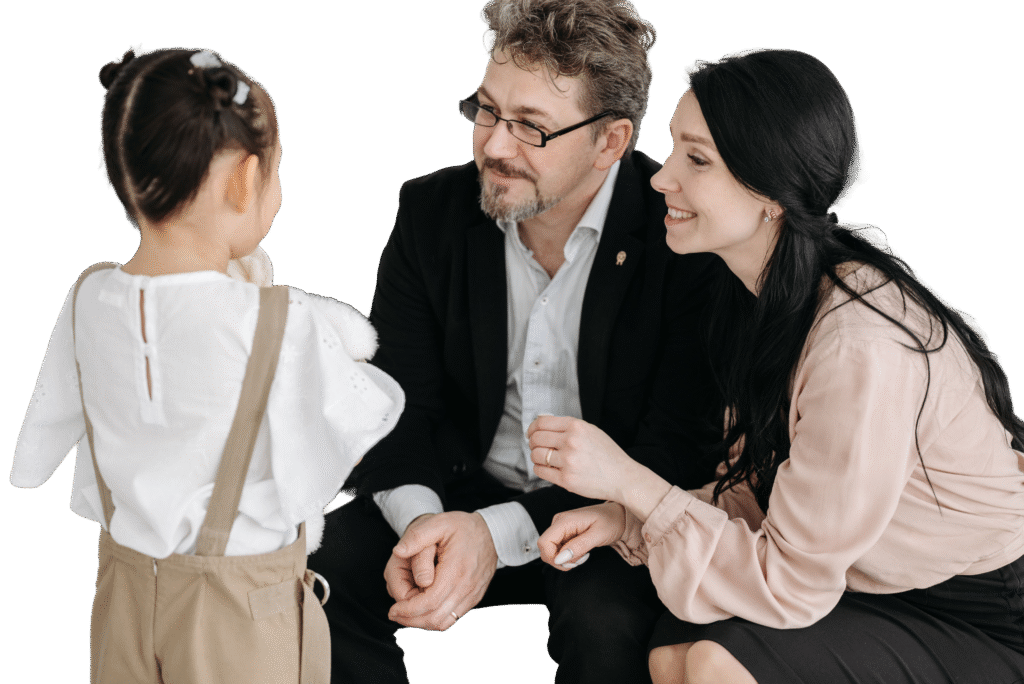
Your child knows exactly what they want to say. They have the words. But the moment another child speaks to them at school, they freeze. They look at the floor. They whisper or say nothing at all. You wonder if it is shyness, or something more.
For many children, it is something more. Social Anxiety Disorder, sometimes called Social Phobia, is a real and diagnosable condition that causes intense, persistent fear of social situations. It is not a personality quirk. It is not bad parenting. It is a mental health condition that responds well to the right support.
What Is Social Anxiety Disorder?
The DSM-5-TR defines Social Anxiety Disorder under the category of Anxiety Disorders, with the diagnostic code F40.10. The core feature is marked fear or anxiety about social situations in which the child may be scrutinised by others. The child fears they will act in a way that will be embarrassing or humiliating, or that others will notice their anxiety and judge them for it.
For a diagnosis to be made, the fear must be out of proportion to the actual threat posed by the situation. It must have persisted for six months or more. And it must cause significant distress or impairment in the child’s social, school, or family life.
In children specifically, the DSM-5-TR notes that the anxiety must occur in peer settings, not only with adults. A child who is comfortable with adults but terrified of other children may still meet the criteria for this diagnosis.
How Social Anxiety Looks in Children
Social anxiety is not the same as introversion. Introverted children prefer quieter environments but are not necessarily distressed by social interaction. Children with Social Anxiety Disorder experience genuine fear. Their heart races. Their stomach hurts. They may cry, cling, freeze, or refuse to attend events altogether.
Here are some signs parents commonly notice:
- Refusing to answer questions in class even when they know the answer
- Avoiding birthday parties, school trips, or group activities
- Speaking only in whispers at school while being perfectly talkative at home
- Spending lunch alone or at the edges of the playground
- Excessive worry for days before a school presentation or sports day
- Physical complaints such as stomachaches or headaches before school events
- Intense difficulty making or keeping friends despite wanting to connect with peers
Older children and teenagers may refuse to attend school altogether if anxiety is left unaddressed for a long time.
What the DSM-5-TR Diagnostic Criteria Mean in Practice
The DSM-5-TR specifies several criteria that a clinician evaluates. The child must show marked fear in social situations where they could be observed or judged. They must fear that they will behave in a way that will be embarrassing. The social situations must almost always provoke anxiety in the child. And the child must either avoid these situations or endure them with intense distress.
There is also a specifier called “performance only,” which applies when the fear is specifically limited to speaking or performing in front of others rather than general social interaction. This is worth mentioning because some children are comfortable in small social settings but completely overwhelmed by any form of public speaking or performance.
A clinician also rules out other causes such as a medical condition, substance use, or another psychiatric disorder that better explains the symptoms.
Why Children Develop Social Anxiety
No single reason explains why one child develops Social Anxiety Disorder and another does not. Research consistently points to a combination of factors working together.
Temperament: Children who were described as behaviourally inhibited as toddlers, meaning they were slow to warm up, easily startled, or cautious in new situations, have a higher chance of developing social anxiety as they grow older.
Family history: Social anxiety runs in families. A parent or sibling with anxiety increases a child’s risk, through both genetic and modelling pathways.
Negative social experiences: Being bullied, mocked, or humiliated by peers can trigger or intensify social anxiety, especially in children who are already temperamentally sensitive.
Overprotective responses: When a parent consistently steps in to rescue a child from social discomfort, the child does not get the chance to learn that social situations are manageable. This reinforces the belief that interaction is dangerous.
How Social Anxiety Affects School Life
School is the social centre of a child’s world, which makes Social Anxiety Disorder particularly disruptive. Children may avoid raising their hand, reading aloud, joining group projects, or eating in the cafeteria. Teachers sometimes misread this as laziness or defiance. The child is not being difficult. They are terrified.
Academic performance can suffer too. When anxiety consumes cognitive resources, there is less bandwidth available for learning. A child may understand the material perfectly but perform poorly in oral assessments or group tasks.
Treatment: What Actually Helps
Social Anxiety Disorder responds very well to Cognitive Behavioural Therapy. A therapist works with the child to identify the beliefs driving the anxiety such as “everyone will laugh at me” or “I will say something stupid” and gently challenge whether those beliefs are accurate.
Exposure therapy is a key part of CBT for social anxiety. This involves the child gradually facing feared social situations in a structured, supported way. Starting small, such as saying hello to one new person, and building up over time teaches the brain that social situations are not actually dangerous.
Parent involvement is critical. Parents learn to respond to social anxiety in ways that validate the child’s feelings while also encouraging gradual approach rather than avoidance.
What Parents Can Do at Home
There are several things parents can do while their child is in therapy or while waiting for an assessment:
- Acknowledge the fear without reinforcing it. Say “I can see this feels scary” rather than “You do not have to go if you do not want to.”
- Avoid over-rescuing. Let the child try, even if they are uncomfortable. Comfort them afterward.
- Arrange low-pressure social opportunities such as one-on-one playdates rather than large group settings.
- Model calm social behaviour yourself. Children watch how adults handle social situations closely.
- Praise effort and courage, not outcomes. “I noticed you said hello to the neighbour today. That took real bravery.”
When to Get Help
If your child’s social fears have persisted for six months or more, if they are avoiding school or social activities, or if they are clearly distressed, it is time to seek a professional evaluation. Social anxiety that is caught and treated early has an excellent prognosis.
At Omora Care, our therapists are experienced in working with children and adolescents who struggle with social anxiety. We offer thorough assessments, individualised therapy, and ongoing support for families navigating this challenge. Reach out to us to book a consultation and take the first step toward helping your child feel confident in their world.