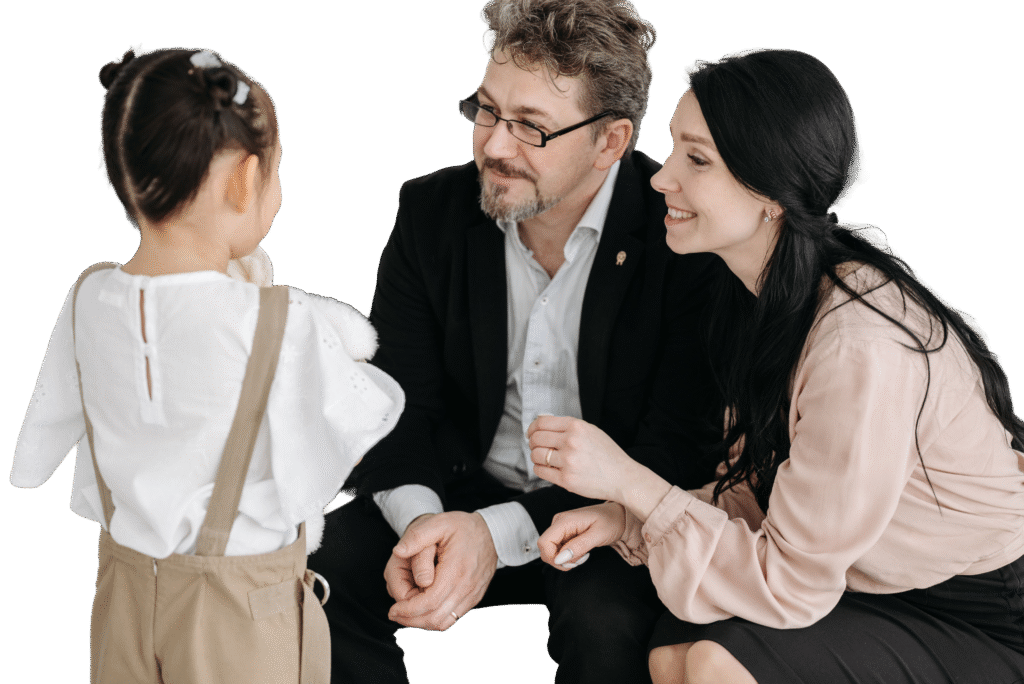
Every child has quirks. Some insist on the same bedtime story every night. Others line up their toy cars in neat rows. These habits are usually a normal part of growing up. But for some children, worries and rituals grow so strong that they take over daily life. That is when parents may be looking at obsessive compulsive disorder, or OCD.
OCD affects roughly one to two in every hundred children, and it often begins between the ages of eight and twelve. Many parents tell us they waited months before seeking help because they thought their child was simply being stubborn or fussy. The truth is that OCD is a recognised medical condition, and it responds very well to the right treatment.
What Is OCD in Children?
OCD has two parts that feed each other. Obsessions are unwanted thoughts, images, or fears that keep returning no matter how hard the child tries to push them away. Compulsions are the actions or mental rituals the child performs to make the anxiety go away, even briefly.
Here is the trap. The ritual brings relief for a few minutes, so the brain learns to repeat it. Over time the child needs to do the ritual more often, for longer, and with greater precision. What began as washing hands once becomes washing until the skin cracks.
Common Signs Parents Notice
Obsessions
- Fear of germs or dirt. The child may refuse to touch door handles, shared toys, or food prepared by others.
- Fear that something terrible will happen. A child may believe that if a task is not done perfectly, a parent will fall ill or have an accident.
- A need for symmetry or exactness. Books, shoes, and stationery must be arranged just so, or intense distress follows.
- Unwanted disturbing thoughts. Some children have scary or shameful thoughts they cannot switch off, which they rarely share.
Compulsions
- Repeated washing or cleaning far beyond what hygiene requires.
- Checking rituals such as checking the door lock, the gas stove, or a school bag again and again.
- Counting, tapping, or repeating words silently until things feel right.
- Seeking reassurance by asking the same question many times a day.
Children often hide these rituals because they feel embarrassed. You might only notice the clues. Chapped hands, long stays in the bathroom, unfinished homework, or a sudden refusal to attend school can all point to something deeper.
What the DSM-5-TR Criteria Mean in Plain Language
Mental health professionals use a manual called the DSM-5-TR to diagnose OCD. The criteria sound technical, but the ideas behind them are simple.
The child must have obsessions, compulsions, or both. The thoughts are intrusive and unwanted, and the child tries to ignore them or cancel them out with some action. The rituals are clearly excessive, or they are not realistically connected to the fear they are meant to prevent. Tapping a table five times cannot actually keep a parent safe, but to the child it feels essential.
The symptoms must also take up real time, usually more than an hour a day, or cause serious distress or problems at school, at home, or with friends. A doctor will also rule out other explanations, such as a medical condition, a medication side effect, or another disorder that fits better.
One point matters especially for children. The DSM-5-TR recognises that children may not understand that their fears are unreasonable. An adult with OCD often knows the ritual makes no sense. A nine year old may fully believe it works. This does not make the diagnosis any less valid.
Why Does OCD Develop?
No parent causes OCD, and no child chooses it. Research points to a mix of factors. Genetics play a strong role, and OCD often runs in families. Differences in brain circuits that handle doubt and safety signals are also involved. Stressful events, such as an illness in the family, a school change, or exam pressure, can trigger symptoms in a child who is already vulnerable.
In our work with families, we often see symptoms flare during board exam years or after big transitions. The pressure does not create OCD by itself, but it can pour fuel on a small fire.
Practical Steps Parents Can Take
- Name the problem gently. Many families find it helpful to call OCD the worry bully. This separates the child from the disorder and reduces shame.
- Do not punish the rituals. Scolding a child for washing or checking only adds guilt. The behaviour is driven by anxiety, not defiance.
- Resist becoming part of the ritual. Answering the same reassurance question twenty times feels kind, but it feeds the cycle. Work with a therapist on how to step back gradually and lovingly.
- Keep routines predictable. Regular sleep, meals, and play lower the background anxiety that OCD feeds on.
- Praise brave behaviour. When your child touches the lift button or leaves the room without checking, notice it. Small wins deserve big encouragement.
- Talk to the school. Teachers can allow extra time or quiet flexibility while treatment is underway, without singling the child out.
- Look after yourself too. Living with a child who has OCD is exhausting. Your calm presence is one of the most powerful tools your child has.
How OCD Is Treated
The good news is that OCD responds well to the right help. The leading approach is a form of therapy called cognitive behavioural therapy, with a specific piece known as exposure and response prevention.
In this work, a child slowly and safely faces the thoughts that scare them while learning to hold off on the compulsion. Over time the false alarm gets quieter, and the child discovers that the feared outcome does not come true. For some children, a doctor may also discuss medication as part of the plan.
When to Seek Professional Help
Seek an assessment if rituals or worries take up more than an hour a day, if your child is distressed or tearful about their own thoughts, or if daily activities like school, meals, and sleep are being disrupted. Earlier help means faster recovery.
The good news is that childhood OCD is highly treatable. Cognitive behaviour therapy with exposure and response prevention is the gold standard. The child learns, step by tiny step, to face a fear without performing the ritual, and the brain slowly learns that nothing bad happens. In some cases a child psychiatrist may also recommend medication to support therapy.
How Omora Care Can Help
At Omora Care, our child psychologists carry out detailed assessments for OCD and related anxiety conditions, then build a therapy plan tailored to your child and your family. We use child friendly exposure and response prevention, and we coach parents at every step so progress continues at home. If the worries and rituals described here feel familiar, please reach out to book an assessment. With the right support, your child can take their life back from the worry bully, one brave step at a time.