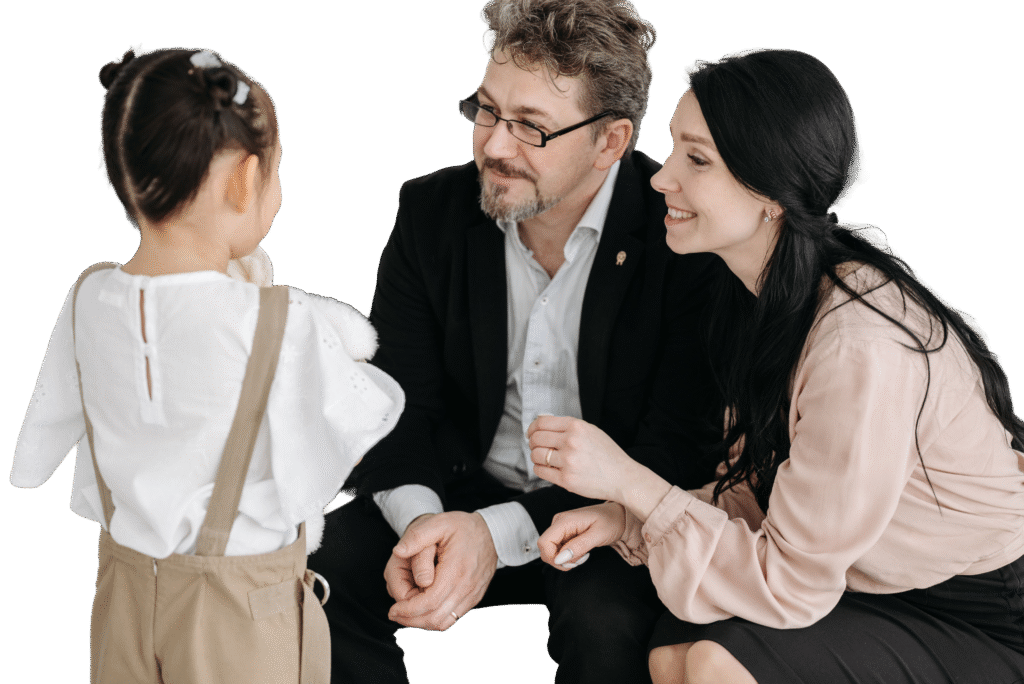
Every morning at school drop-off, some children cling to their parent so tightly that it takes three adults to separate them. They cry, they plead, they sometimes vomit from distress. Parents often hear: “She will be fine in five minutes.” But for children with Separation Anxiety Disorder, it is rarely just a phase.
Separation Anxiety Disorder is one of the most common anxiety disorders in childhood. According to the DSM-5-TR (Diagnostic and Statistical Manual of Mental Disorders, Fifth Edition, Text Revision), it is diagnosed when a child experiences excessive fear or anxiety about separation from attachment figures, far beyond what is considered developmentally appropriate.
What the DSM-5-TR Says About Separation Anxiety Disorder
The DSM-5-TR classifies Separation Anxiety Disorder under the category of Anxiety Disorders, with the diagnostic code F93.0. For a diagnosis to be made, the child must show at least three of the following for a minimum of four weeks:
- Recurrent and excessive distress when separation from home or major attachment figures occurs or is anticipated
- Persistent and excessive worry about losing major attachment figures through illness, injury, or death
- Persistent worry that an untoward event will lead to separation from a major attachment figure
- Persistent reluctance or refusal to go out, away from home, to school, or elsewhere because of fear of separation
- Persistent and excessive fear of being alone or without major attachment figures at home or in other settings
- Persistent reluctance or refusal to sleep away from home or to go to sleep without being near a major attachment figure
- Repeated nightmares involving the theme of separation
- Repeated complaints of physical symptoms such as headaches, stomachaches, nausea, or vomiting when separation from major attachment figures occurs or is anticipated
The DSM-5-TR also specifies that these symptoms must cause clinically significant distress or impairment in social, academic, or other important areas of functioning. It must not be better explained by another mental disorder.
How It Looks in Real Life
Separation Anxiety Disorder shows up differently depending on the child’s age. Younger children may throw tantrums, refuse school, or follow a parent from room to room. Older children and teenagers may complain of stomach pain every school morning, refuse sleepovers, or repeatedly call parents from school. Some children cannot fall asleep unless a parent stays with them throughout the night.
Many parents interpret this behaviour as stubbornness or manipulation. In reality, the child is experiencing genuine terror. The fear feels as real and overwhelming to them as any physical threat would.
It is also worth noting that separation anxiety is developmentally normal in infants and toddlers. The concern arises when it persists well beyond the expected age, typically after age six or seven, or when it is so severe that it disrupts daily life.
What Causes Separation Anxiety Disorder
No single cause explains Separation Anxiety Disorder. Research points to a combination of factors:
Genetics and temperament: Children who are naturally more sensitive or who have a family history of anxiety disorders are at higher risk.
Life stressors: A significant change such as moving to a new city, the death of a grandparent, parental conflict, or even a prolonged illness can trigger the disorder in a vulnerable child.
Parenting patterns: Overly protective parenting is not a cause in itself, but it can sometimes reinforce avoidance behaviours that maintain anxiety over time.
Attachment history: Children who experienced inconsistent caregiving or early trauma may be more prone to developing separation-related fears.
How It Affects the Whole Family
Separation Anxiety Disorder is exhausting for families. Parents often adjust their entire schedules around the child’s fears. They skip work, avoid social gatherings, and co-sleep for years past a point that feels sustainable. Siblings may feel overlooked. Marriages come under strain.
Parents also carry guilt. They wonder if they have done something wrong or if staying home one too many times has caused the problem. The answer is almost always no. But without proper support, the cycle of anxiety and accommodation can become deeply entrenched.
Treatment That Works
The good news is that Separation Anxiety Disorder responds well to treatment. The most evidence-based approach is Cognitive Behavioural Therapy, or CBT. It helps children identify anxious thoughts, understand that feared outcomes are often unlikely, and gradually face separation in small, manageable steps. This graduated exposure is done carefully, with support, not by forcing the child into situations that overwhelm them.
Parent coaching is an equally important part of treatment. Parents learn how to respond to anxiety in ways that are warm and validating while also avoiding reassurance patterns that accidentally strengthen the child’s belief that separation is dangerous.
In some cases, particularly when anxiety is severe or has persisted for a long time, a combination of therapy and medication may be recommended by a psychiatrist. Selective serotonin reuptake inhibitors, or SSRIs, are commonly used for childhood anxiety disorders when indicated.
School Refusal and Separation Anxiety
One of the most common and disruptive consequences of Separation Anxiety Disorder is school refusal. The child may genuinely feel sick every morning. They are not faking. The anxiety produces real physical symptoms and the body responds accordingly.
Addressing school refusal early is important. The longer a child stays home, the harder it becomes to return. A good therapist, in collaboration with the school, can create a gradual return-to-school plan that makes the process feel manageable for everyone involved.
When to Seek Help
If your child’s separation fears have persisted for more than four weeks, are causing significant distress, or are interfering with school, friendships, or family life, it is time to seek a professional evaluation.
At Omora Care, our therapists work with children and families facing exactly these challenges. We provide thorough assessments, individualised therapy plans, and parent support throughout the process. Whether your child is five or fifteen, early intervention leads to much better outcomes.
You do not have to figure this out alone. Reach out to us to book an assessment and take the first step toward helping your child feel safe again.